

What is a Deadlock?
A deadlock occurs when two or more threads or processes are unable to proceed because each is waiting for the other to release a resource (Lock).
Think of it like two bartenders in a small bar, both needing the same two shakers to make their drinks. If each grabs one shaker and waits for the other to release theirs, neither can make their drink — they’re deadlocked.
Common Causes of Deadlocks
Circular Wait
Circular wait occurs when Thread A holds Lock 1 while waiting for Lock 2, and Thread B holds Lock 2 while waiting for Lock 1.
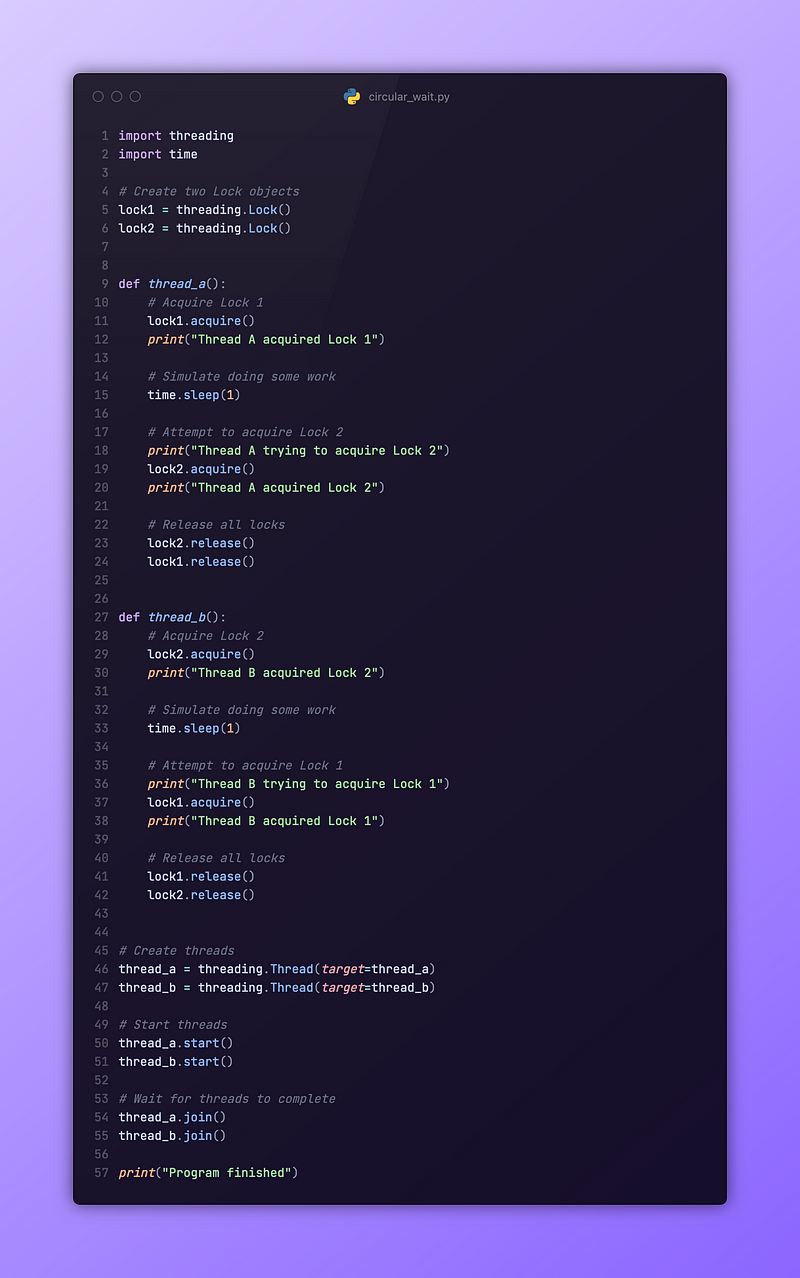
The output of this scenario:
Thread A acquired Lock 1Thread B acquired Lock 2Thread A trying to acquire Lock 2Thread B trying to acquire Lock 1Self-Deadlock
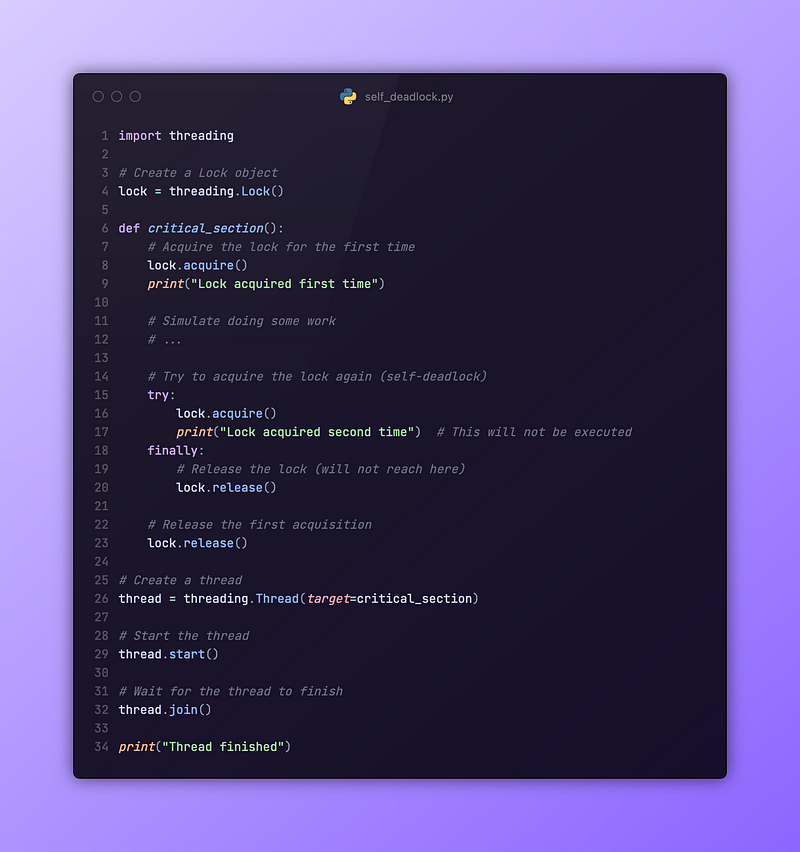
A self-deadlock happens when a thread attempts to acquire the same lock twice, causing it to wait indefinitely on itself.
Resource Starvation
Resource starvation occurs when a thread fails to release a resource due to unhandled exceptions or infinite loops.
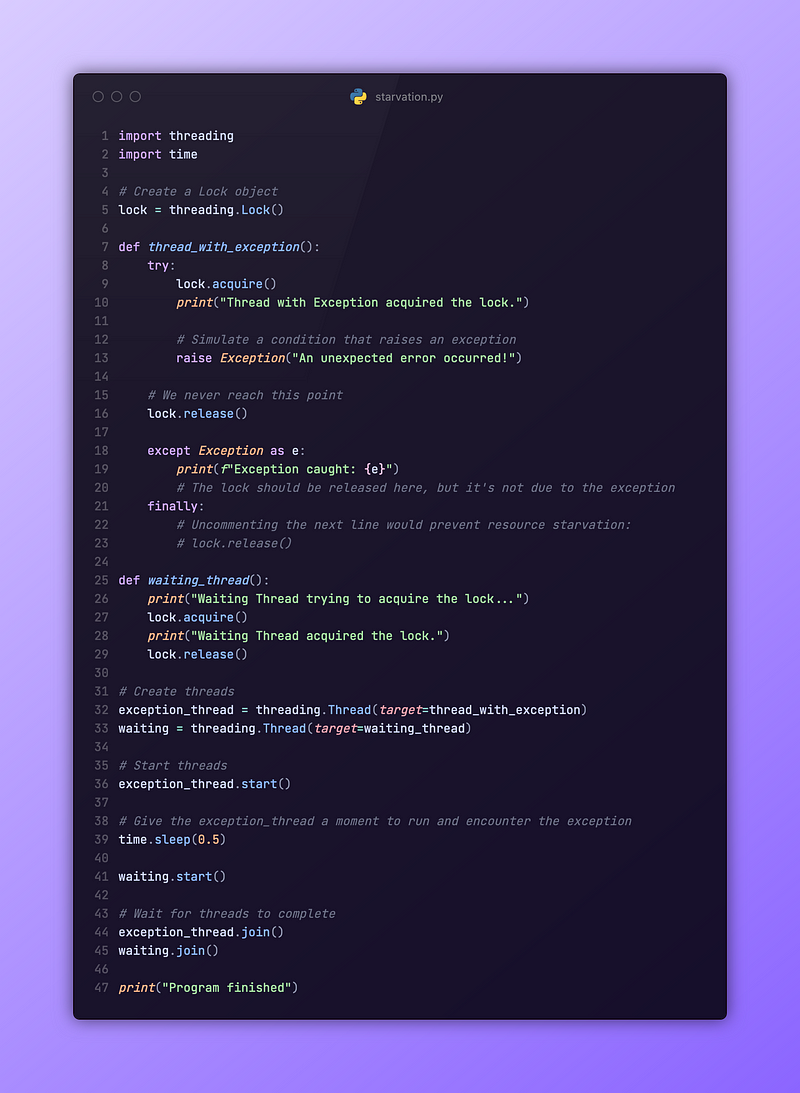
Output:
Thread with Exception acquired the lock.Exception caught: An unexpected error occurred!Waiting Thread trying to acquire the lock...How to Avoid Deadlocks
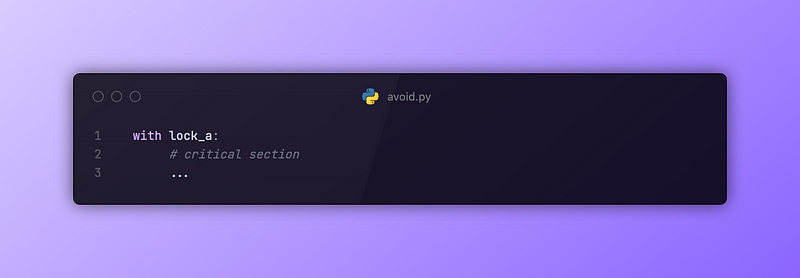
1. Use Context Managers
Use with statements to ensure locks are properly released, even when errors occur.
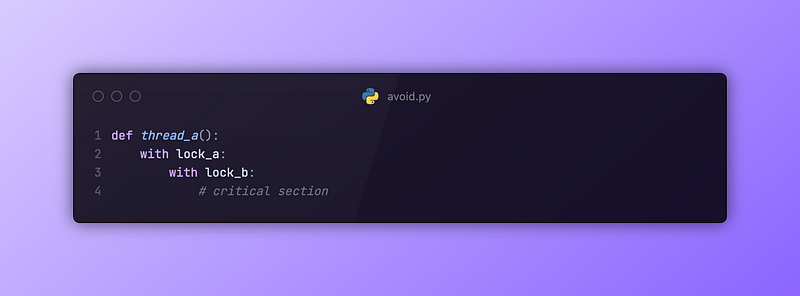
2. Consistent Lock Ordering
Always acquire locks in the same sequence across all threads to prevent circular dependencies.
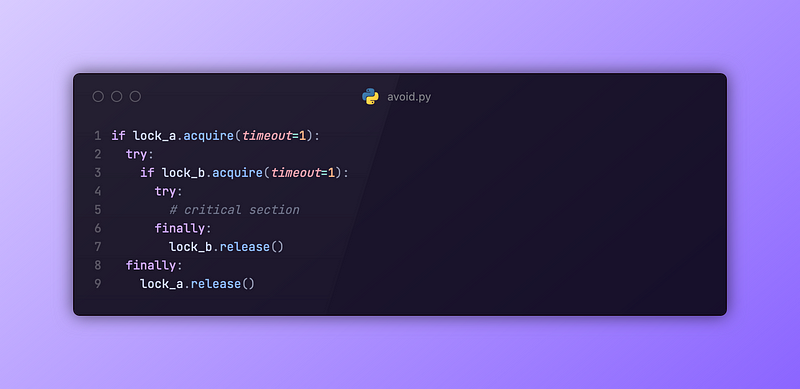
3. Timeouts
Apply timeout parameters when acquiring locks to avoid waiting indefinitely.
4. Avoid Nested Locks
Minimize the number of locks held simultaneously to reduce the complexity and potential for deadlocks.
5. Keep Lock Scope Small
Hold locks for the minimum duration necessary. Perform non-critical operations outside of locked sections.
6. Deadlock Detection and Recovery
For critical applications, implement monitoring mechanisms that can detect and recover from deadlock situations.
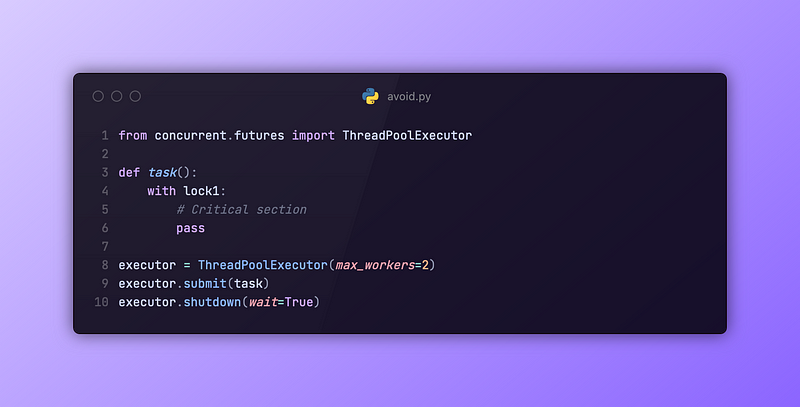
7. Use Concurrency Libraries
Leverage higher-level concurrency libraries like concurrent.futures to abstract away the complexity of thread management.
Conclusion
Deadlocks can be a significant challenge in concurrent programming, but understanding their causes and following best practices can help you avoid them in your codebase. By using context managers, consistent lock ordering, timeouts, and higher-level concurrency libraries, you can write safer and more robust multithreaded Python applications.